About This Event
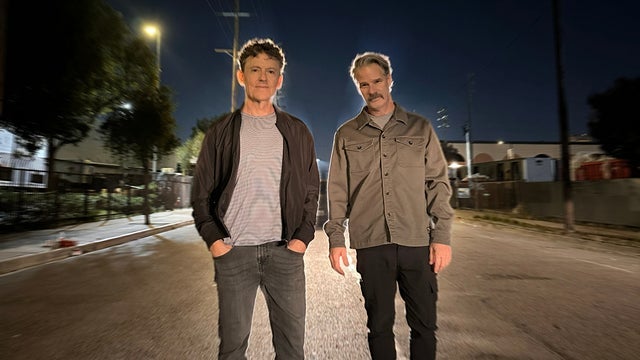
El Ten Elevens Nowhere Faster, the duos 16th release, was forged within that unease. Across eight tracks, it considers not just nothingness but velocitythe strange urgency that propels us forward even when the destination remains unclear. We are committed to acceleration, convinced speed itself might save us. The 33-minute album slows just long enough to pose the harder questions: what are we running from, and what do we think we can outrun?That tension appears even in the albums artwork, once again created with longtime collaborator Rob Fleming. It depicts a classic liminal space: familiar, anonymous, quietly unsettling. A stained glass-colored building and a streetlamp blur at the edges, suggesting motion that feels less like escape than enclosurethe kind that traps rather than transports.Nowhere Faster emerged from Kristian Dunn and Tim Fogartys longest break from touring and recording in their 23 years together, though break is something of a misnomer. Dunns famously restless creative pace never slowed. Instead, he began writing for not one but two drummers, handing Fogarty one of the most demanding challenges of his career. The record also marks a first for the band, weaving real strings and piano throughout, deepening the palette of what is already one of their most layered works.The albums titles and sounds draw from moments scattered across the bands 23-year history. Opener Uncanny Valley Girl marks the return of long-retired effects like the delay pedal, stacking basslines into a dense, enveloping wall. Its a clear-eyed take on AI-era paranoia, anchored by Fogartys steady rhythmsnare taut, cymbals gently alivegiving the sci-fi unease something solid to lean on. Bjorks Alarm Clock, meanwhile, takes its title from an insult hurled at the band by a guitarist of a punk band on their first tour; you can almost hear Dunn and Fogartys quiet laughter beneath the buoyant bass and bow-scratched strings.Still, Nowhere Faster is not a retreat into nostalgia. El Ten Eleven remains invested in risk and reinvention. The record continues to center Fogartys propulsive drumming and Dunns bass-driven experimentation: the first four tracks (side A) feature electric bass, while the latter half (side B) shifts to acoustic bass processed through pedals, subtly altering the albums emotional weight. Last Night In The Kitchen reaches for the slick, sleazy bombast of classic Bond themes, opening new corridors for Dunns ever-expanding musical ambitions.Ultimately, Nowhere Faster is an album about reckoningabout time, endurance, and the uncertainty of how long a band, or a life, can last. We are all fumbling toward finitude. The question is not whether well arrive, but what we want to hear on the way there. What will we dance to as the ground begins to shift beneath us? If nothing else, it may sound something like Nowhere Faster.With support from Ishi, a high energy electronic band from Dallas, Tx with influences of Soul, Folk, R&B, & Edm.